Fabric-destroying insects such as the varied carpet beetle ( Anthrenus verbasci ) and the webbing clothes moth ( Tineola bisselliella ) cause measurable structural damage to keratin-based materials, including wool…
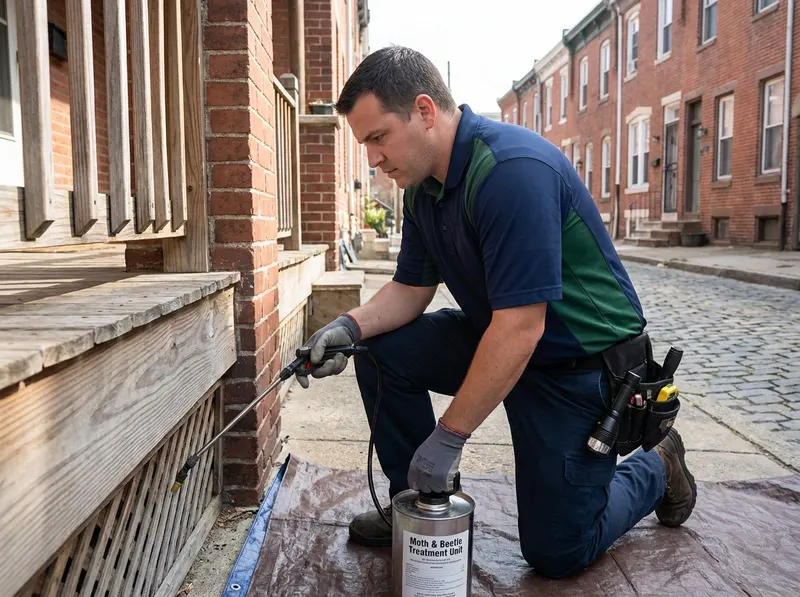
Fabric-destroying insects such as the varied carpet beetle (Anthrenus verbasci) and the webbing clothes moth (Tineola bisselliella) cause measurable structural damage to keratin-based materials, including wool rugs, silk draperies, and antique upholstery. In dense urban architectural zones such as Fishtown, Northern Liberties, and Passyunk Square, party walls and original hardwood flooring provide concealed voids where lint, pet dander, and organic debris accumulate. The EPA Integrated Pest Management principles establish that physical extraction combined with targeted, low-toxicity applications provides higher eradication rates than broad-spectrum airborne fogging. Remediation begins with high-efficiency particulate air (NIOSH filtration standards) extraction along baseboard perimeters, subflooring cracks, and closet corners to eliminate egg clusters and instar larvae before chemical contact occurs.
Pantry beetles such as the sawtoothed grain beetle and confused flour beetle target grain products, dried spices, and pet foods in residential pantries. Properties near commercial food hubs like Reading Terminal Market or multi-unit brownstones in Rittenhouse Square and University City frequently experience shared-wall migration through plumbing chases and electrical conduits. Crestora Pest Defense implements precise botanical or pyrethroid treatments in accordance with the Pennsylvania Department of Agriculture pesticide regulations, avoiding direct contamination of food-preparation surfaces. Pheromone monitoring lures certified under Entomological Society of America standards are deployed to map infestation hot spots and measure post-treatment population reduction over a standard 30-day lifecycle.
In larger historic structures throughout Chestnut Hill, Mount Airy, and Manayunk, wool insulation, taxidermy, and heritage textiles demand specialized protocols. A single female carpet beetle deposits 40 to 100 eggs in dark, undisturbed storage areas, with larvae feeding actively for up to 300 days before pupation. While dry cleaning or extreme thermal exposure (temperatures exceeding 120°F for a minimum of 30 minutes, documented by the Penn State Extension) handles individual garments, structural harborages require targeted desiccant dusts such as amorphous silica. In multi-family dwellings across South Philadelphia and Kensington, treating isolated closets without addressing baseboard voids creates recurring cycles of re-infestation. Selecting targeted residual perimeter applications over whole-home fumigation minimizes downtime, avoids non-target pesticide exposure for domestic pets, and restores interior environmental safety.
Every job gets a firm, written price after a free on-site visit.
For standards, safe disposal, and service guidance on PEST CONTROL SEVICE in Philadelphia, PA, useful references include U.S. EPA, ENERGY STAR, U.S. Dept. of Energy, Consumer.gov, U.S. Census Bureau, and Google Maps. General consumer and small-business resources are available from USA.gov, Better Business Bureau, FTC Consumer Advice, U.S. Small Business Administration, and Ready.gov.
Tell us about your moth beetle control job in Philadelphia and we'll send a clear, written quote, usually the same day.
 Crestora Pest Defense