Crestora Pest Defense delivers scientific, clinically rigorous pest control service in Philadelphia to protect residential and commercial structures from wood-destroying insects, disease-carrying rodents, and persistent interior pests. Our state-certified technicians execute modern integrated pest management protocols across historic solid brick party walls, aging fieldstone basement foundations, and dense urban utility conduits to intercept active infestations directly at their perimeter entry points.

A professional pest control service in Philadelphia is an integrated structural inspection, biological eradication, and mechanical exclusion system designed to permanently eliminate insect and rodent populations from historic row homes, multi-family apartment complexes, and commercial properties.
Every service reflects the same meticulous attention to detail, whether it's a single job or a larger pest control sevice project across Philadelphia.

Pavement ants (Tetramorium immigrans) and black carpenter ants (Camponotus pennsylvanicus) routinely penetrate structural framing across older residential properties in Philadelphia. Infiltration typically occurs through moisture-damaged floor joists, deteriorated exterior window headers, and cracked sill plates seated directly atop masonry foundations. Crestora Pest Defense deploys species-specific carbohydrate and protein metabolic baits paired with targeted non-repellent transfer chemistry and structural void dusting to eliminate reproductive queens inside parent colonies without triggering defensive satellite bud nesting. Diagnostic assessments utilize thermal imaging to pinpoint concealed interior plumbing leaks and roof-line flashing gaps that provide the elevated timber moisture levels carpenter ants require for excavating nesting galleries. Technicians apply long-lasting perimeter micro-encapsulated treatments around ground-level expansion joints to establish an impassable insect barrier, complying with chemical application standards established by the United States Environmental Protection Agency . Ongoing monitoring programs track spring reproductive flights to verify the permanent collapse of subterranean and structural colony networks.
Get a quote →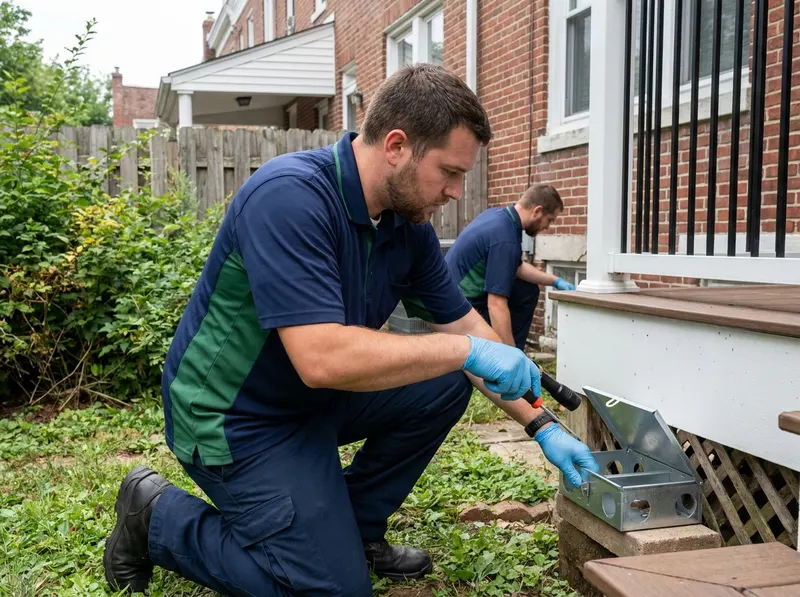
Norway rats (Rattus norvegicus) and standard house mice (Mus musculus) heavily utilize subterranean utility pathways, compromised terra-cotta sewer lateral lines, and continuous crawlspace voids beneath attached row home basements throughout Center City, Kensington, and South Philadelphia. Complete biological eradication requires an intensive physical exclusion methodology rather than relying on standard retail rodenticides that leave deceased rodents decaying within inaccessible architectural cavities. Crestora Pest Defense technicians thoroughly inspect sub-grade foundation perimeters, closing structural breaches larger than one-quarter of an inch using heavy-gauge galvanized hardware cloth, high-density copper wire mesh, and industrial elastomeric polyurethane sealants that resist rodent gnawing. Inside living areas and unfinished basements, we install sealed, tamper-resistant mechanical capture stations along active rodent runways, which are mapped through ultraviolet tracking powders and directional rub-mark identification. Comprehensive waste cleanouts eliminate pheromone-heavy droppings, urine trails, and biological contamination, restoring domestic sanitary conditions in strict accordance with vector management parameters defined by the Centers for Disease Control and Prevention .
Get a quote →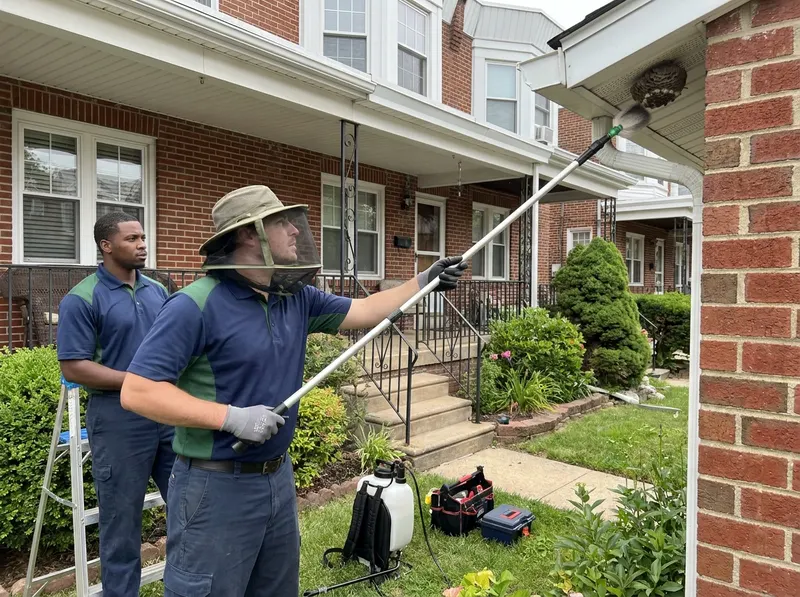
Aerial yellowjackets (Vespula maculifrons), paper wasps (Polistes dominula), and bald-faced hornets (Dolichovespula maculata) consistently establish high-risk nests within residential roof eaves, unsealed attic soffits, exterior wall voids, and landscaped architectural borders from June through late September. Crestora Pest Defense delivers rapid, low-drift colony neutralization using pressurized freezing agents, aerosol knockdown formulations, and microscopic pyrethroid dust injections placed directly into structural void entrances. Once all active worker hornets and foraging wasps are neutralized, our specialists physically extract exterior hanging paper nests and scrape structural anchor pads to deter secondary colonization by rival queens. When subterranean yellowjackets construct extensive nests within lawn root structures or retaining wall weep holes, our technicians perform targeted sub-surface soil liquid drenches that rapidly saturate the nesting matrix without contaminating residential landscaping. Post-extraction treatment protocols include sealing exterior fascia gaps and installing micro-mesh attic ventilator screening to permanently eliminate future nest-building access points, reducing the danger of defensive stings for occupants, children, and domestic pets.
Get a quote →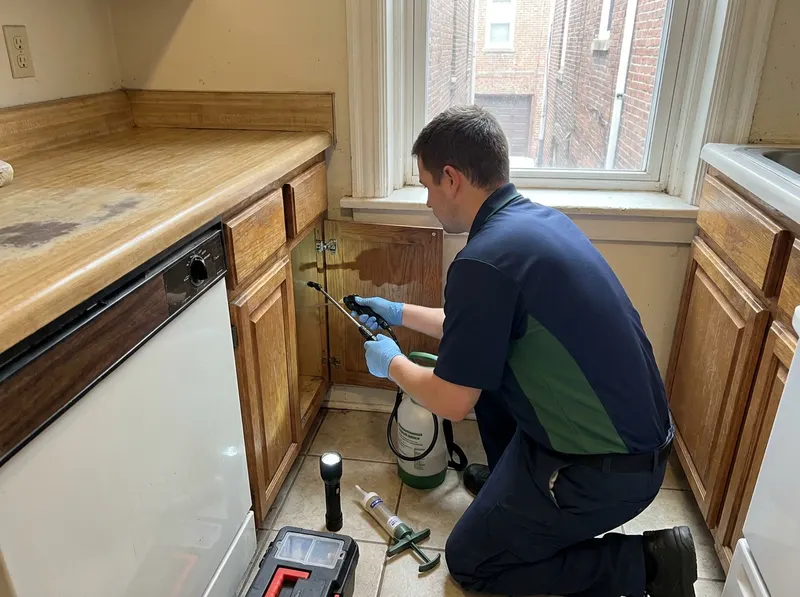
German cockroaches (Blattella germanica) reproduce rapidly within the warm, high-humidity environments found behind commercial kitchen equipment, residential stove ranges, dishwashers, and interior plumbing stacks, while massive American cockroaches (Periplaneta americana) routinely ascend into living quarters from municipal sewer junctions and basement floor drains during midsummer heat waves. Crestora Pest Defense breaks the biological reproductive cycle through precision micro-dot applications of targeted gel baits, insect growth regulators (IGRs) that prevent immature nymphs from achieving sexual maturity, and fine insecticidal dusts injected behind electrical junction boxes, cabinet hinges, and wall trim voids. For heavy industrial infestations and multi-family infrastructure, our technicians utilize enzymatic drain cleaners to digest the bio-film and organic matter lining internal waste pipes, eliminating the baseline nutrient supply that sustains sewer roach colonies. Structural gap caulking along kitchen splash boards and pipe chases prevents horizontal migration between shared row home walls, ensuring thorough eradication that aligns with residential sanitation recommendations issued by the U.S. Department of Housing and Urban Development Office of Lead Hazard Control and Healthy Homes .
Get a quote →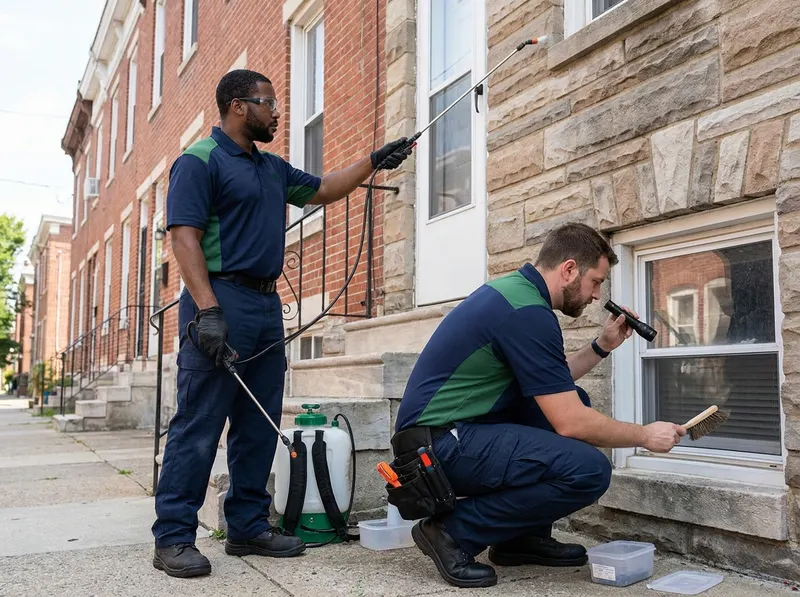
Common house spiders (Parasteatoda tepidariorum), long-legged cellar spiders (Pholcidae), and aggressive wolf spiders (Lycosidae) frequently colonize dark, humid fieldstone basements, exterior masonry recesses, and ground-level window wells across Philadelphia properties. While these arachnids serve as natural predators of outdoor insects, extensive interior web development and nocturnal hunting activity cause significant domestic distress for residents. Crestora Pest Defense utilizes specialized telescoping, electrostatically charged web-removal equipment to physically extract adult spiders, dense webbing, and reproductive egg sacs from ceiling corners, floor joists, and foundation perimeter sills. We subsequently treat foundation margins, structural thresholds, and unfinished basement corners with micro-crystallized pyrethroid formulations that provide a durable residual contact barrier across rough stone and unfinished brick surfaces. Because indoor spider populations cannot survive without an abundant food web, our technicians combine physical removal with targeted perimeter barrier treatments to suppress baseline insect prey populations, eliminating the biological incentive for spiders to establish interior hunting territories.
Get a quote →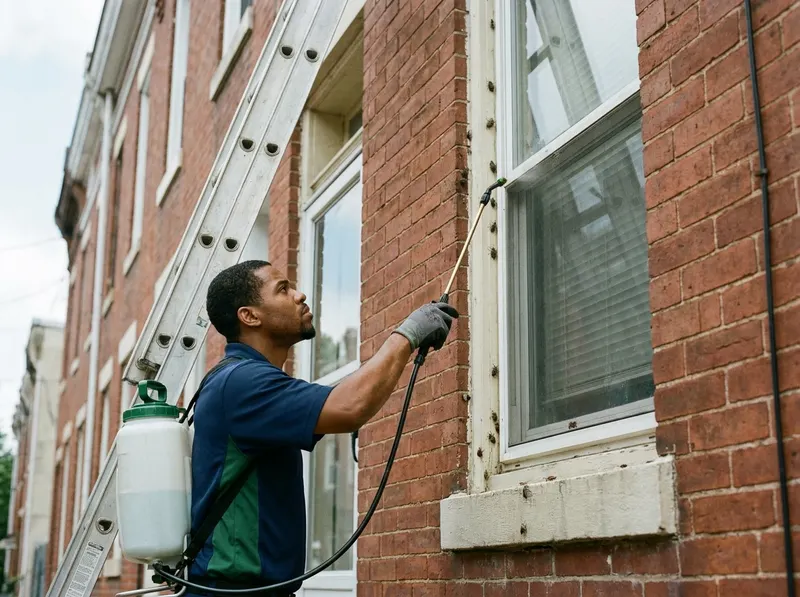
Brown marmorated stink bugs (Halyomorpha halys) gather in massive overwintering clusters on sun-warmed exterior brick facades, stucco perimeters, and vinyl siding across residential sections of Northwest and Northeast Philadelphia during seasonal temperature drops from September through November. As exterior temperatures continue to decline, these agricultural pests force their way through microscopic architectural fissures, unsealed window air conditioning sleeves, roof soffits, and attic ridge vents to hibernate within interior wall insulation layers. Crestora Pest Defense executes preventative exterior exclusion programs, applying industrial silicone-polyurethane sealants around exterior window frame perimeters, siding interfaces, and utility line entrances to physically deny entry. Technicians simultaneously treat west- and south-facing exterior walls, eaves, and window casings with targeted, UV-stable residual repellent sprays that prevent aggregating stink bugs from settling on the building envelope. This comprehensive strategy eliminates the risk of indoor emergence during warm winter spells, preventing structural staining and noxious defensive odor emissions in strict accordance with pest management guidance maintained by the Northeastern IPM Center .
Get a quote →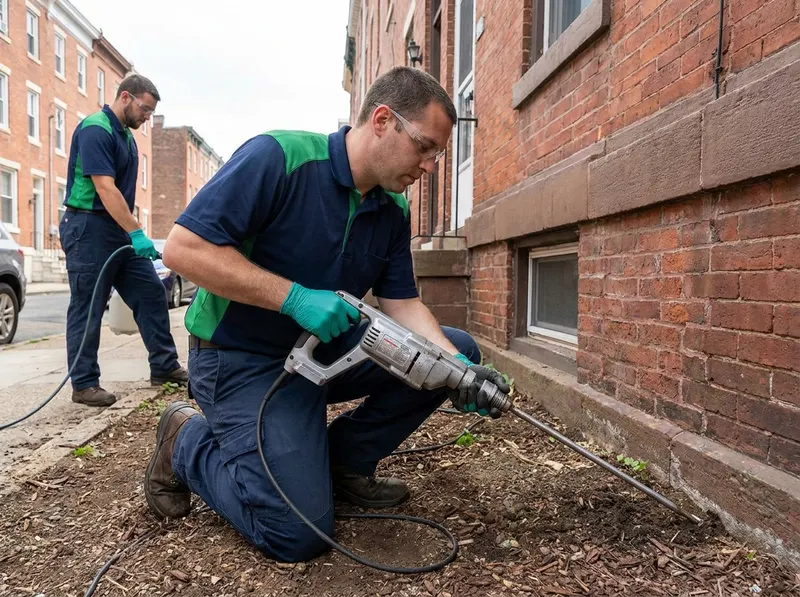
Eastern subterranean termites (Reticulitermes flavipes) live in massive, concealed soil colonies beneath residential properties, continuously excavating structural lumber, interior subfloors, and wood framing joists from the inside out while leaving external timber surfaces deceptively intact. Infestations are frequently discovered only when homeowners observe exploratory mud shelter tubes climbing foundation brickwork or witness sudden spring swarms of winged reproductive alates emerging from baseboards between late March and May. Crestora Pest Defense halts subterranean wood-destroying activity by creating a continuous non-repellent chemical barrier throughout the soil surrounding your home's foundation perimeter, utilizing precision trenching, foundation rod injections, and sub-slab concrete drilling. Foraging worker termites unknowingly pass through the undetectable liquid termiticide, transferring the lethal active compound throughout the central nest through social grooming and trophallaxis, which results in total colony elimination. We install continuous subterranean monitoring stations around the exterior building perimeter to track local termite pressure and safeguard property equity, operating under standards endorsed by the National Pest Management Association .
Get a quote →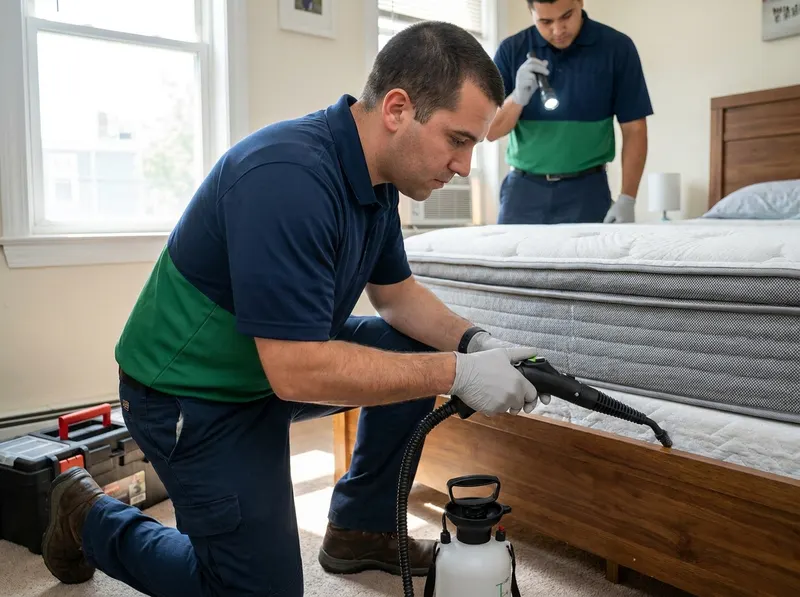
Bed bugs (Cimex lectularius) represent one of the most psychologically distressing and structurally complex pests affecting high-density residential properties, student housing complexes, and single-family residences across Philadelphia. These flat, nocturnal parasites harbor inside mattress seams, headboard joints, upholstered furniture, electrical wall plates, and deep flooring voids beneath carpeting, feeding exclusively on human blood and spreading rapidly via personal luggage and shared party wall framing. Crestora Pest Defense implements a comprehensive, multi-modal eradication protocol that pairs precision high-temperature dry steam applications targeting heat-sensitive egg adhesive proteins with long-lasting amorphous silica desiccant dusts injected into perimeter baseboard voids. We supplement mechanical treatments with modern insect growth regulators and liquid active formulations to eliminate insecticide-resistant bed bug strains without requiring the costly disposal of structural furniture. Detailed pre-treatment preparation checklists, specialized mattress encasements, and rigorous follow-up diagnostic inspections conducted 14 to 21 days later ensure absolute population eradication, restoring quiet domestic security across every treated bedroom space.
Get a quote →You get a firm, itemized quote for your pest control sevice before any work begins, no surprises, no pressure.
Careful prep, tidy work, and a full cleanup when we are done. We treat your home and belongings like our own.
The same trusted, background-checked team from the first call to the final check.
Selecting an appropriate structural pest remediation program depends directly on building architecture, foundation construction materials, and the specific lifecycle of the target organism. If you occupy an attached brick row home or historic brownstone in urban sectors such as Fishtown, Northern Liberties, Passyunk Square, or Rittenhouse Square, choose structural integrated pest management paired with physical party-wall exclusion; if you manage a detached single-family residence with open perimeter yardage in Chestnut Hill, Mount Airy, or Manayunk, select continuous exterior barrier defense, soil grading modifications, and seasonal landscape mitigation. org/">Fairmount Park, whereas high-density attached row dwellings require labor-intensive interior mechanical void sealing behind kitchen cabinetry, radiator pipe cutouts, and bathroom plumbing chases to prevent horizontal pest transfer between adjacent properties.
When structural timbers show evidence of subterranean termite tube construction, localized non-repellent liquid trenching delivers decades of defense without requiring full interior room evacuations; conversely, widespread bed bug infestations across residential rental properties demand multi-stage chemical desiccant applications, heat-assisted mattress and void steaming, or targeted insect growth regulator treatments across every sleeping quarter to eliminate all nymph and egg stages. Commercial food service facilities near high-traffic transit nodes must implement monthly automated pheromone monitoring and microbial grease-digesting drain treatments, trading lower initial inspection fees for ongoing compliance tracking under municipal sanitation codes. First-time clients establishing an ongoing seasonal protection agreement qualify for a promotional discount of $25 off a same-day pickup or initial diagnostic appointment upon booking confirmation.
Every project gets a firm, written price after a free on-site visit. Ranges below for orientation.
Tell us about your pest control sevice job and we'll send a clear, written quote, usually the same day. Or just call and talk to a real Philadelphia pro.
(215) 252-5924
Philadelphia's unique urban architecture presents specific structural pest dynamics rarely encountered in modern suburban developments. The city's vast inventory of historic brick row homes, originally constructed throughout the 18th, 19th, and early 20th centuries, relies on continuous structural party walls composed of porous lime mortar and rough red brick. Over decades of settlement, minor voids form within these common walls, creating continuous, block-long structural highways that allow rodents, cockroaches, and bed bugs to travel freely between attached residences. Properties situated near bustling commercial transit and culinary hubs, such as 30th Street Station, Reading Terminal Market, or the Italian Market along South 9th Street, face intense baseline rodent pressure from aging municipal combined stormwater-sewer mains. Meanwhile, residences situated along the heavily wooded fringes of Wissahickon Valley Park, Fairmount Park, and the Schuylkill River deal with severe seasonal pressures from subterranean termites nesting in damp alluvial soils, as well as migrating stink bugs and carpenter ants emerging from dense deciduous forest canopies. Furthermore, unfinished rubble and fieldstone basement foundations common to older residential areas like Manayunk, Germantown, and Passyunk Square routinely allow subterranean moisture to weep through structural masonry, fostering humid microclimates where silverfish, centipedes, and subterranean rat burrows flourish. Crestora Pest Defense engineers every mechanical exclusion barrier, elastomeric sealant compound, and biological treatment formulation to withstand regional climate shifts, protecting historic architectural integrity without compromising lime-based mortar or decorative masonry facades, fully compliant with structural conservation guidance issued by the Philadelphia Historical Commission and the building standards enforced by the Philadelphia Department of Licenses and Inspections.
Free estimates for Philadelphia & the surrounding area.
For standards, safe disposal, and service guidance on pest control sevice in Philadelphia, PA, useful references include U.S. EPA, ENERGY STAR, U.S. Dept. of Energy, Consumer.gov, U.S. Census Bureau, and Google Maps. General consumer and small-business resources are available from USA.gov, Better Business Bureau, FTC Consumer Advice, U.S. Small Business Administration, and Ready.gov.
 Crestora Pest Defense